
The work behind
the confidence.
Real site photographs from our drilling and soakage work. See the access challenges, the equipment and the practical setup behind each service.
Compact rigs. Considered access.
Indoor spaces, covered passages and established gardens each call for a different setup. These photographs show our compact equipment positioned in real working areas.

Inside an existing structure
Compact drilling equipment working within a covered, enclosed area.

Between buildings
Compact drilling equipment in a narrow side passage.
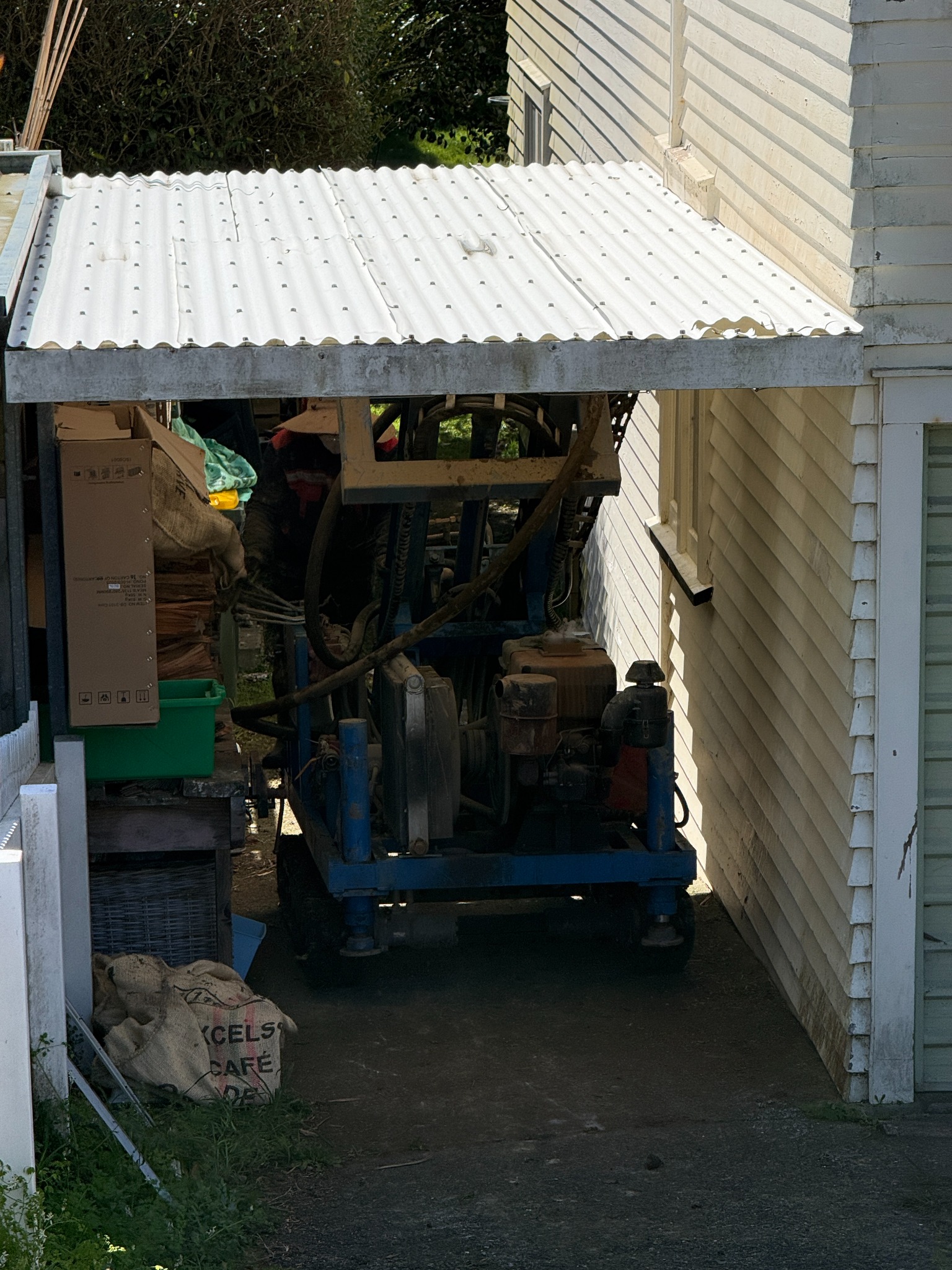
Covered access
Crew and compact equipment working within a covered passage.
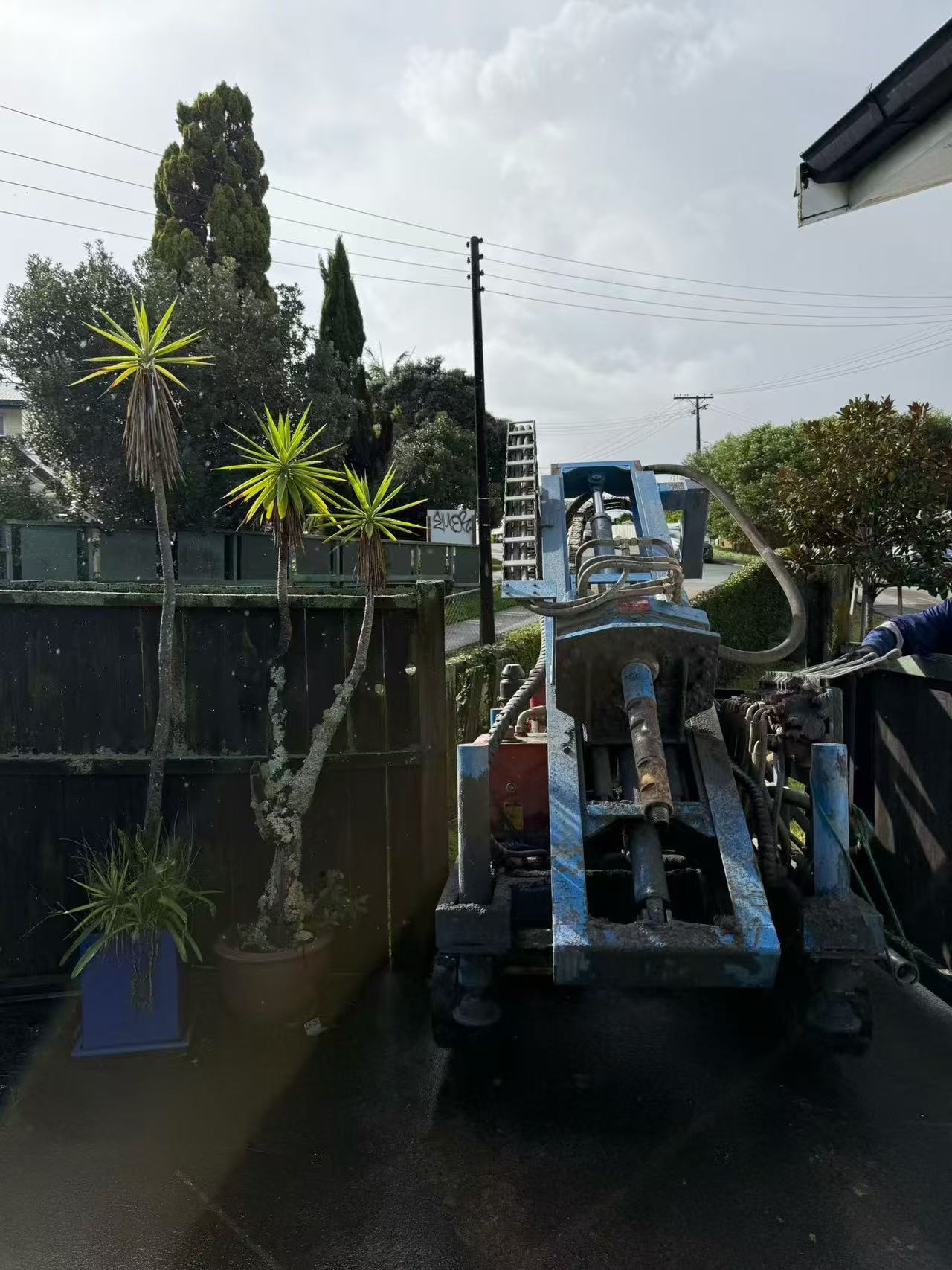
A confined working area
Rig positioned beside fencing and an existing building.
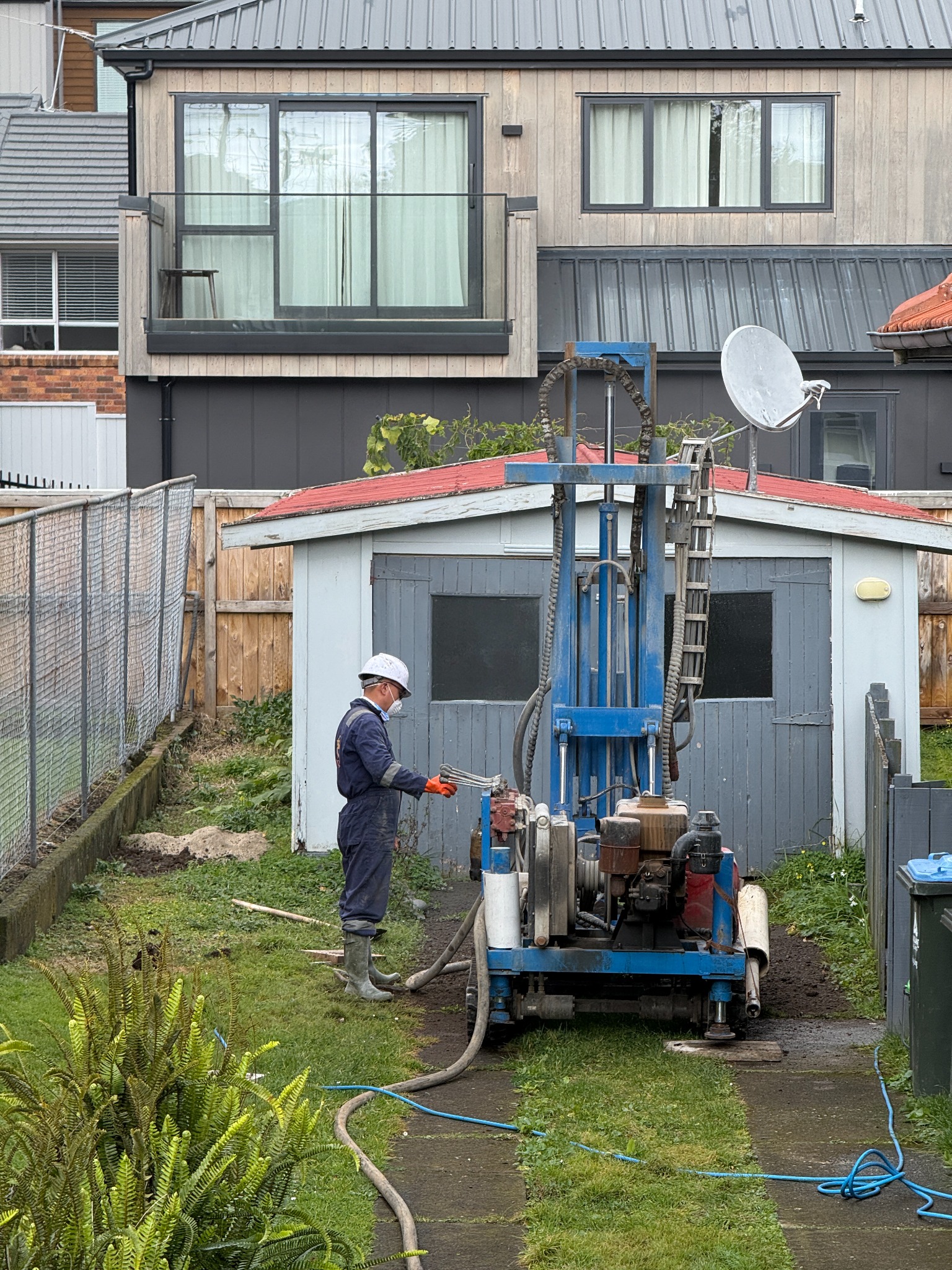
Residential backyard setup
Compact equipment and crew positioned behind an existing home.
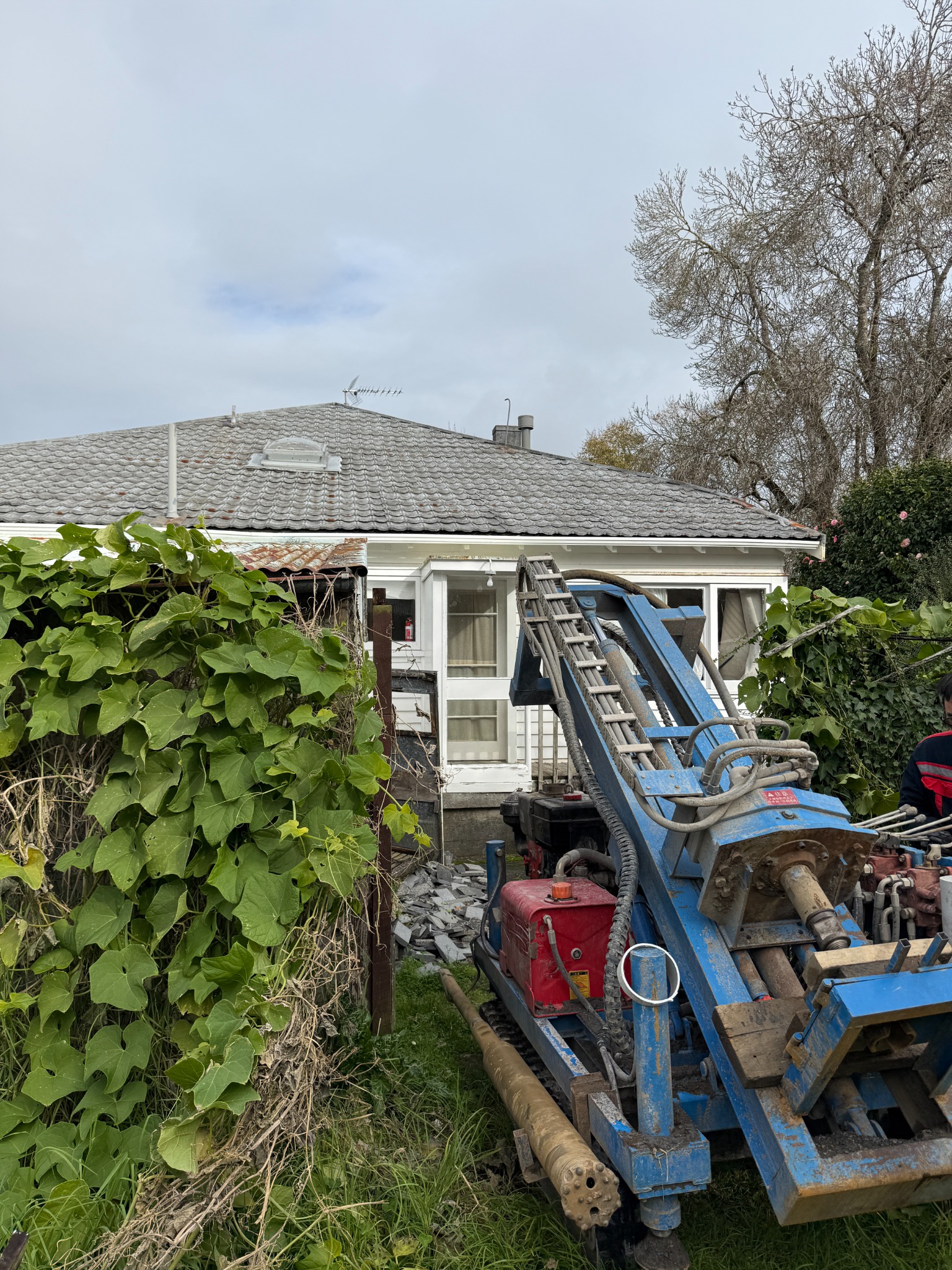
Alongside an existing home
A compact drilling setup between established landscaping and a house.
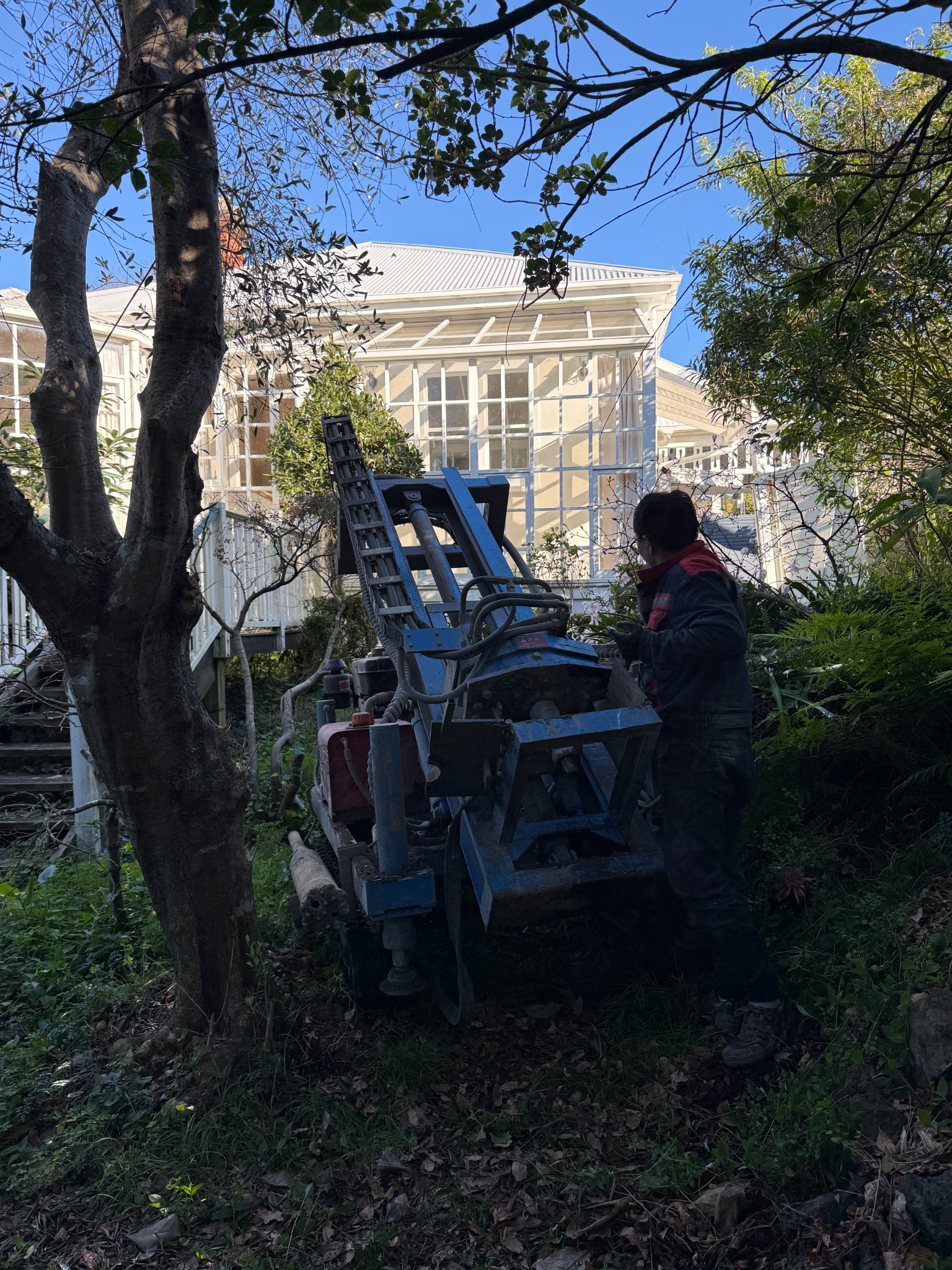
Garden access
Compact rig positioned in a garden beside an established home.
For your project, we review clear width, turns, overhead clearance, ground support and room to operate. Send the access route and drilling point together so we can assess a suitable approach.
Water supply. Measured performance.
Water-truck flow testing helps assess the performance of an existing soakage device under the agreed test conditions. Our site photographs show the truck positioning and hose arrangements behind that work.

Water truck and hose route
Water supply equipment with hoses laid out across the site.
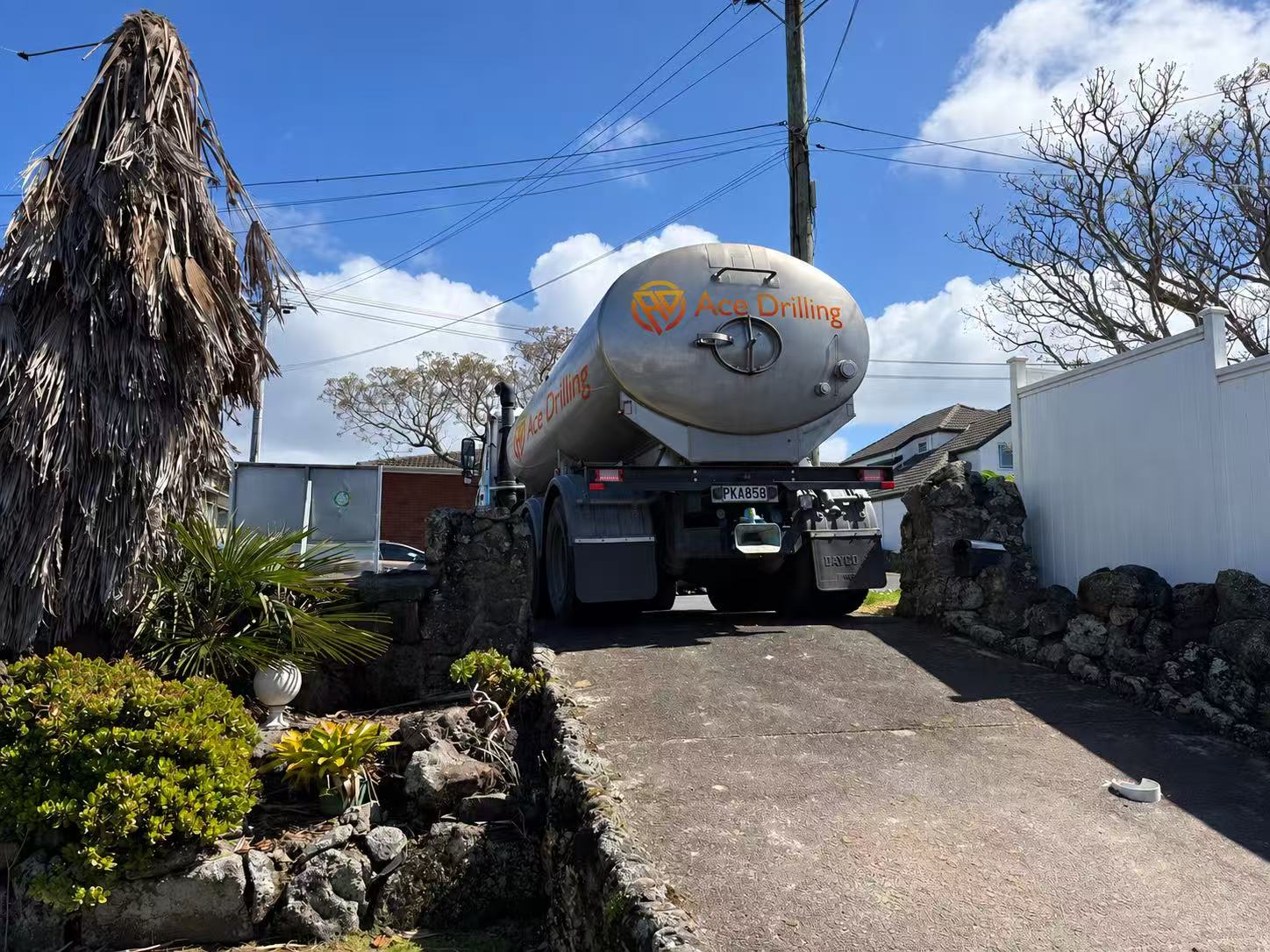
Water supply on a driveway
Water truck positioned on a residential driveway for site work.
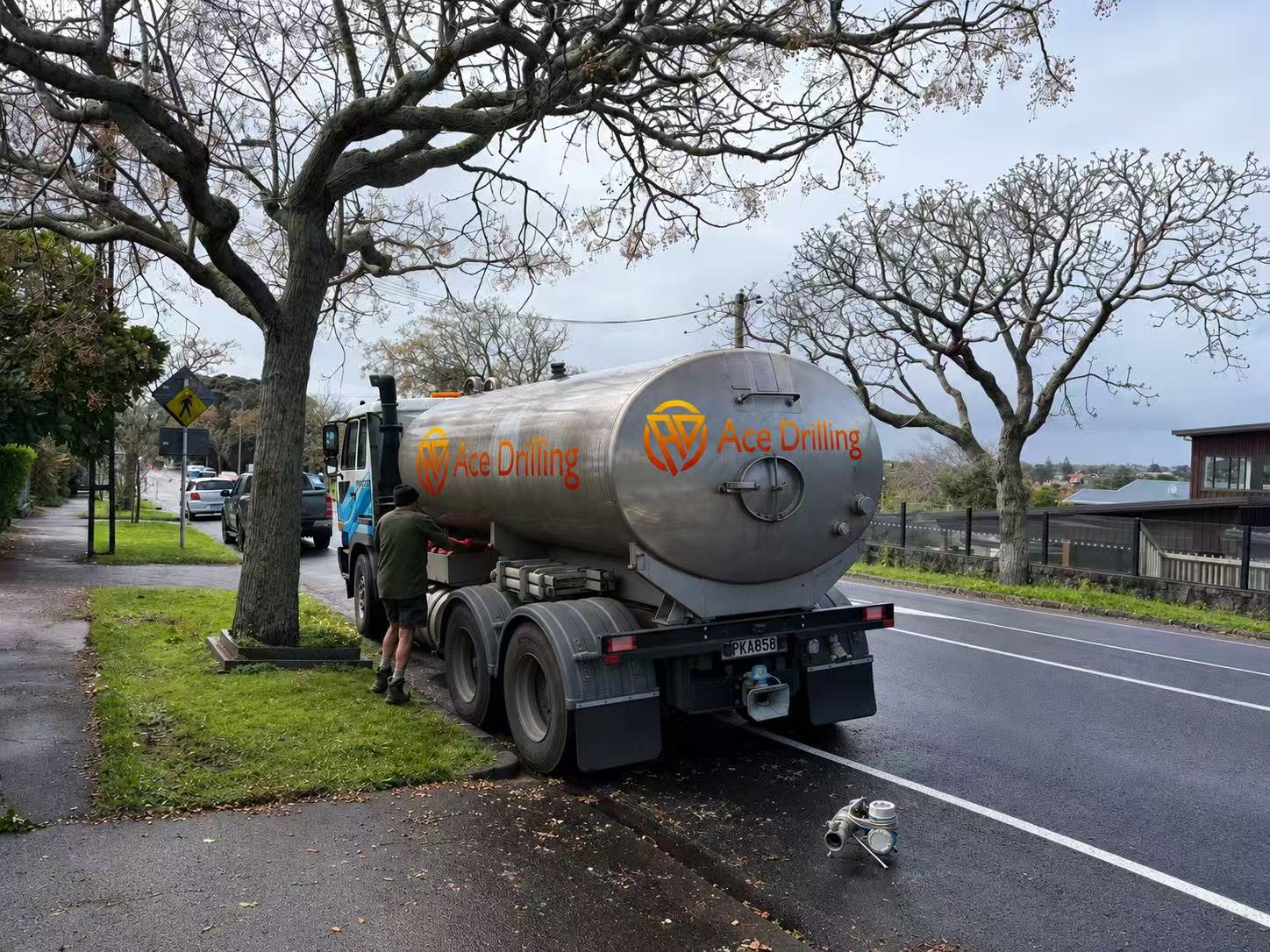
Water supply from the roadside
Water truck positioned at the roadside for a residential site.
We coordinate access to the device, water supply and the test setup. Your engineer receives the agreed results and any relevant limitations; a nearby result is never substituted for your site’s measured performance.
Boreholes for the site in front of us.
Our soakage work takes us from existing residential properties to open construction sites. The photos show different rig positions, ground surfaces and arrangements for hoses and equipment.

Drilling beside an existing building
Crew operating a compact rig with hoses arranged at the drilling point.

Drilling during construction
Compact rig positioned within an active earthworks area.
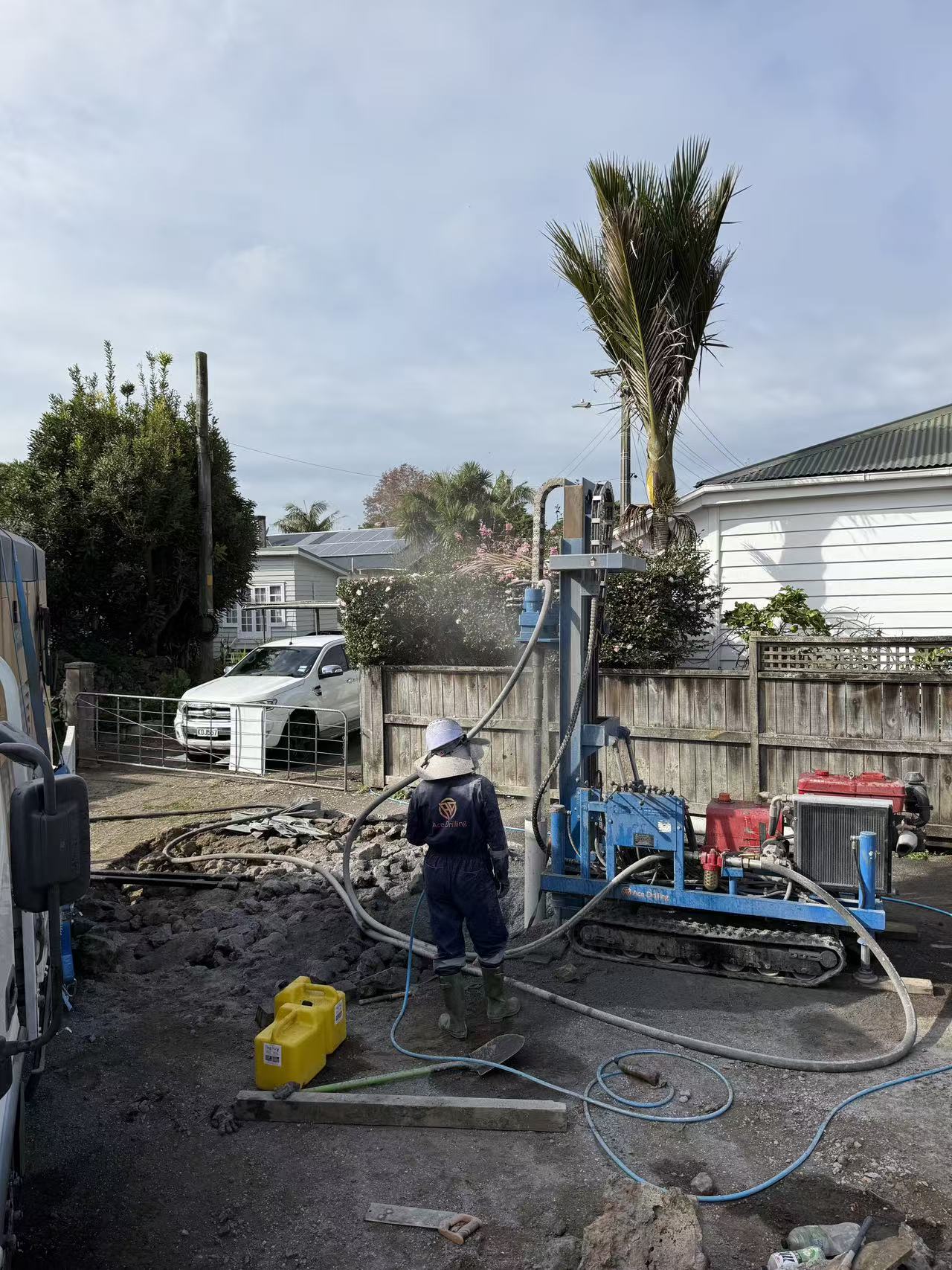
Drilling on an open site
Rig and hoses set up within a residential construction site.
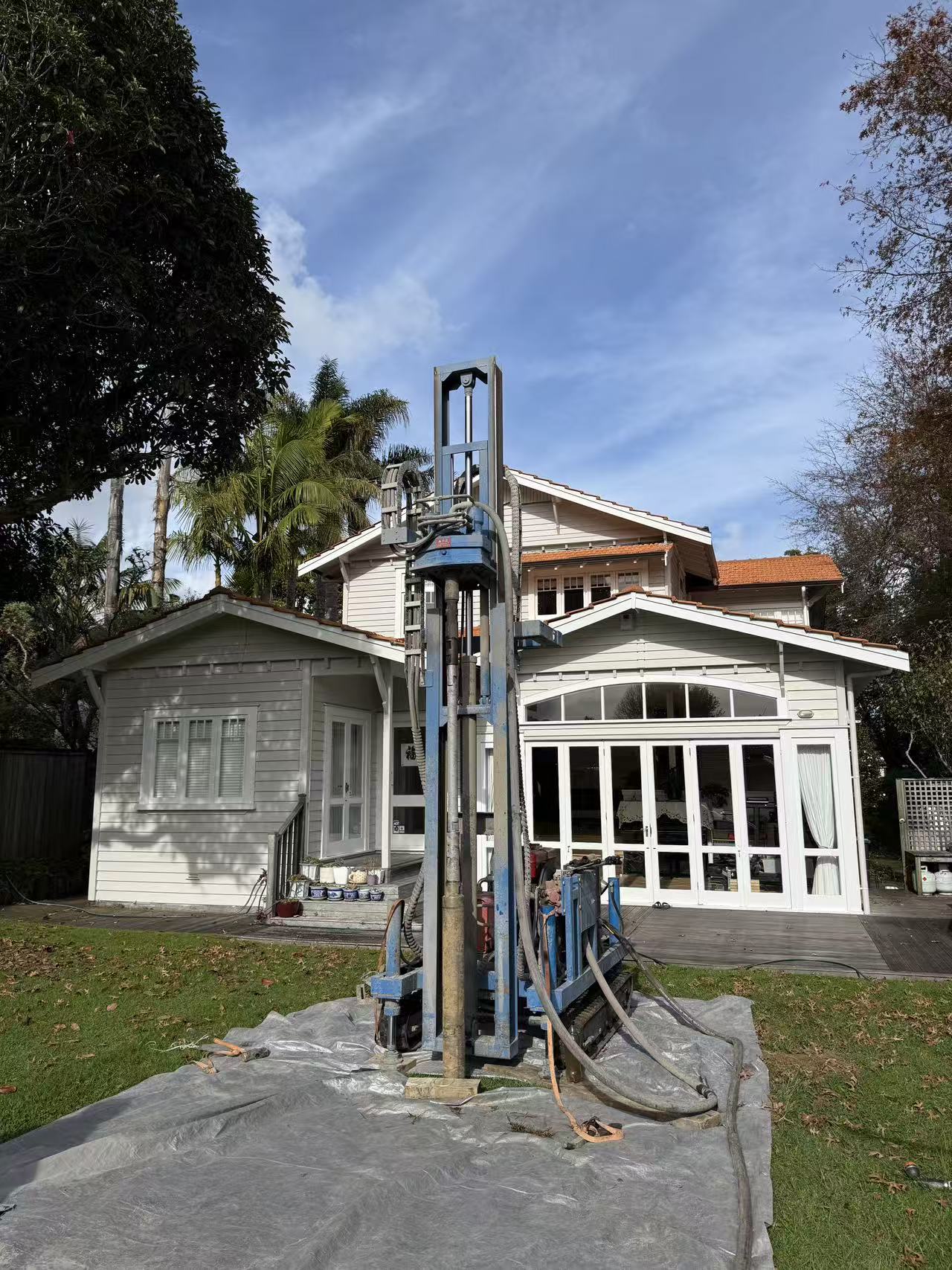
Residential soakage works
Drilling equipment set up on a residential property.
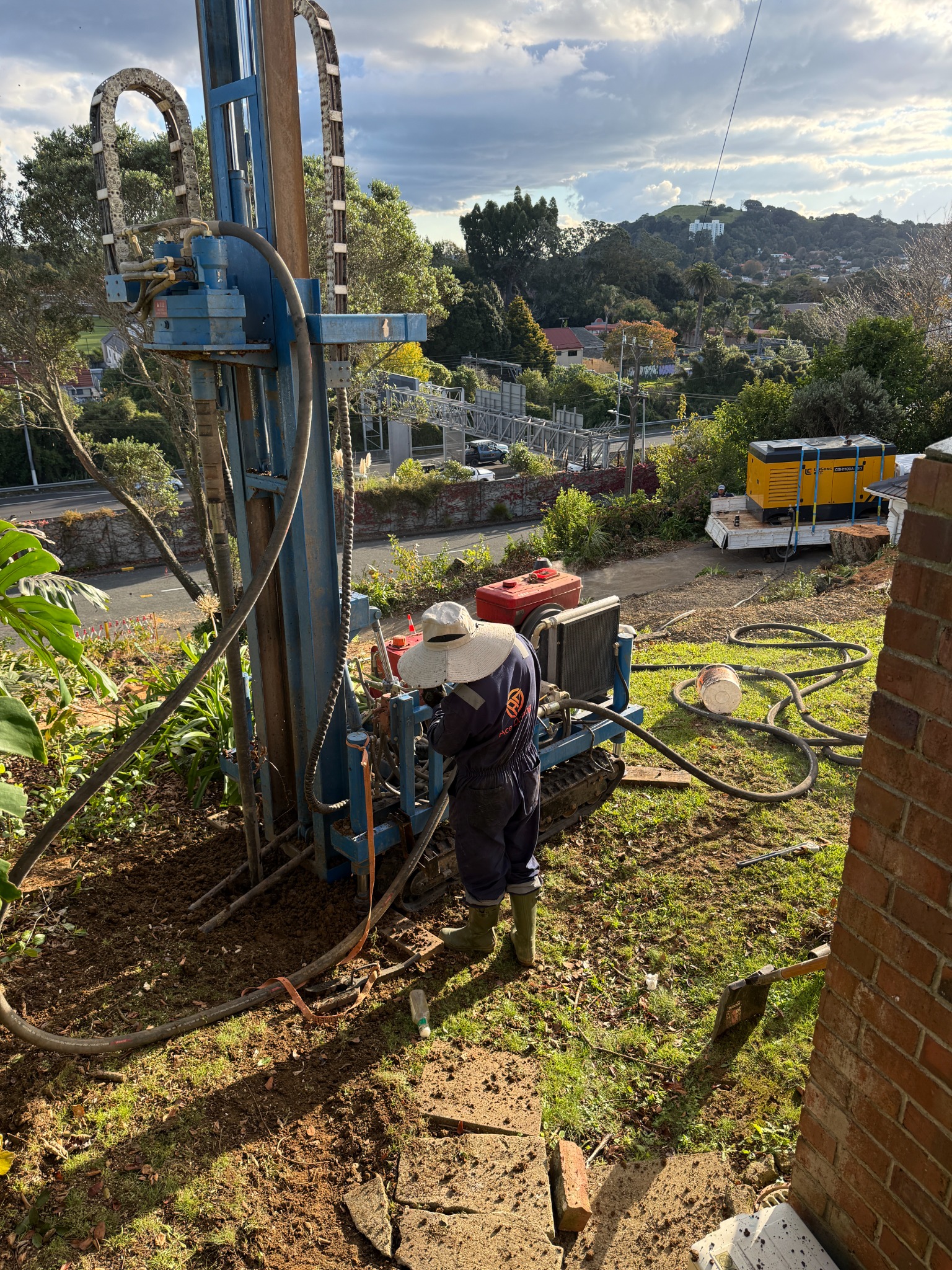
Garden-side drilling
Drilling equipment positioned on a planted residential site.
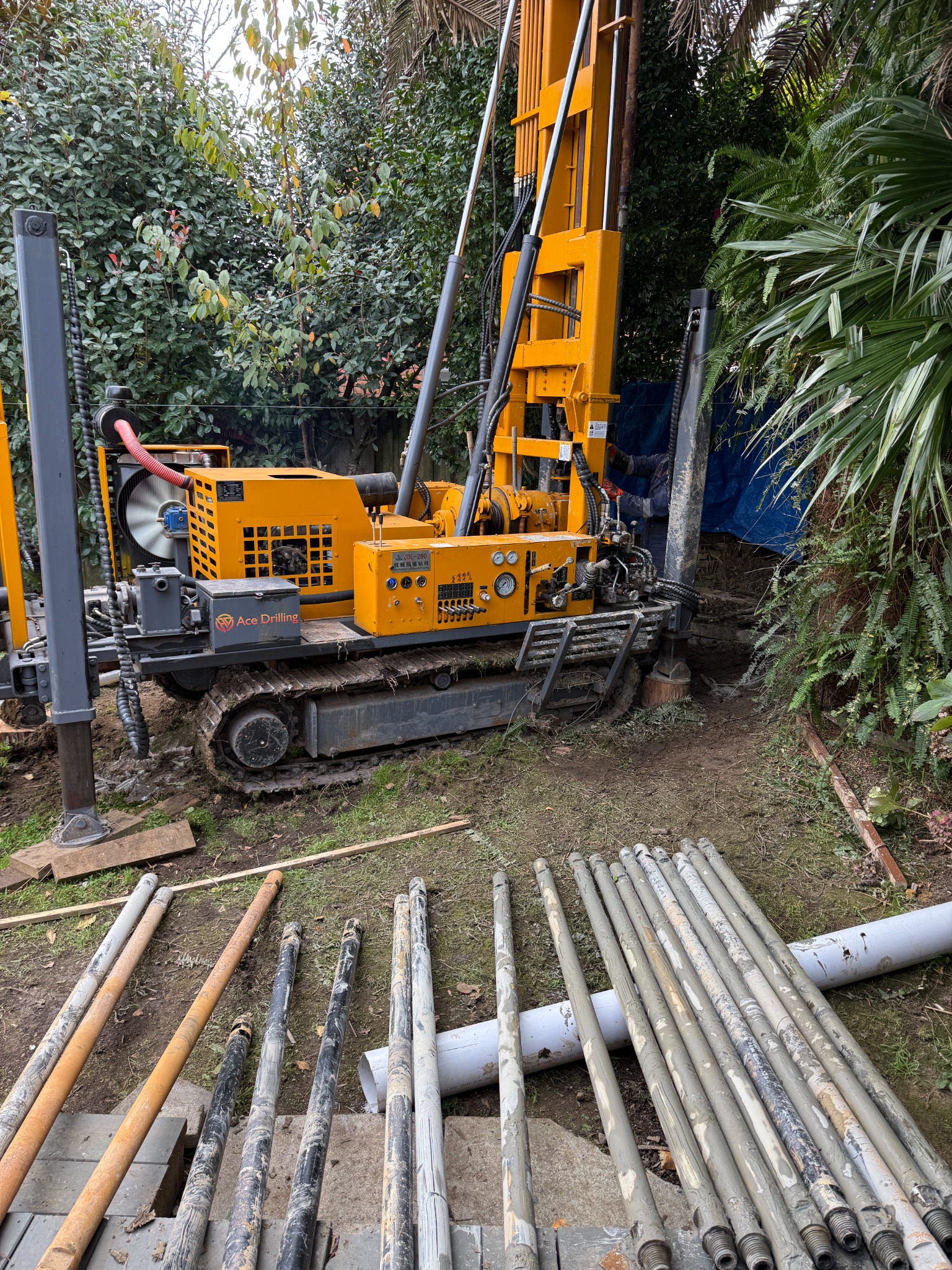
Equipment prepared on site
Drilling rig and rods arranged alongside a planted boundary.
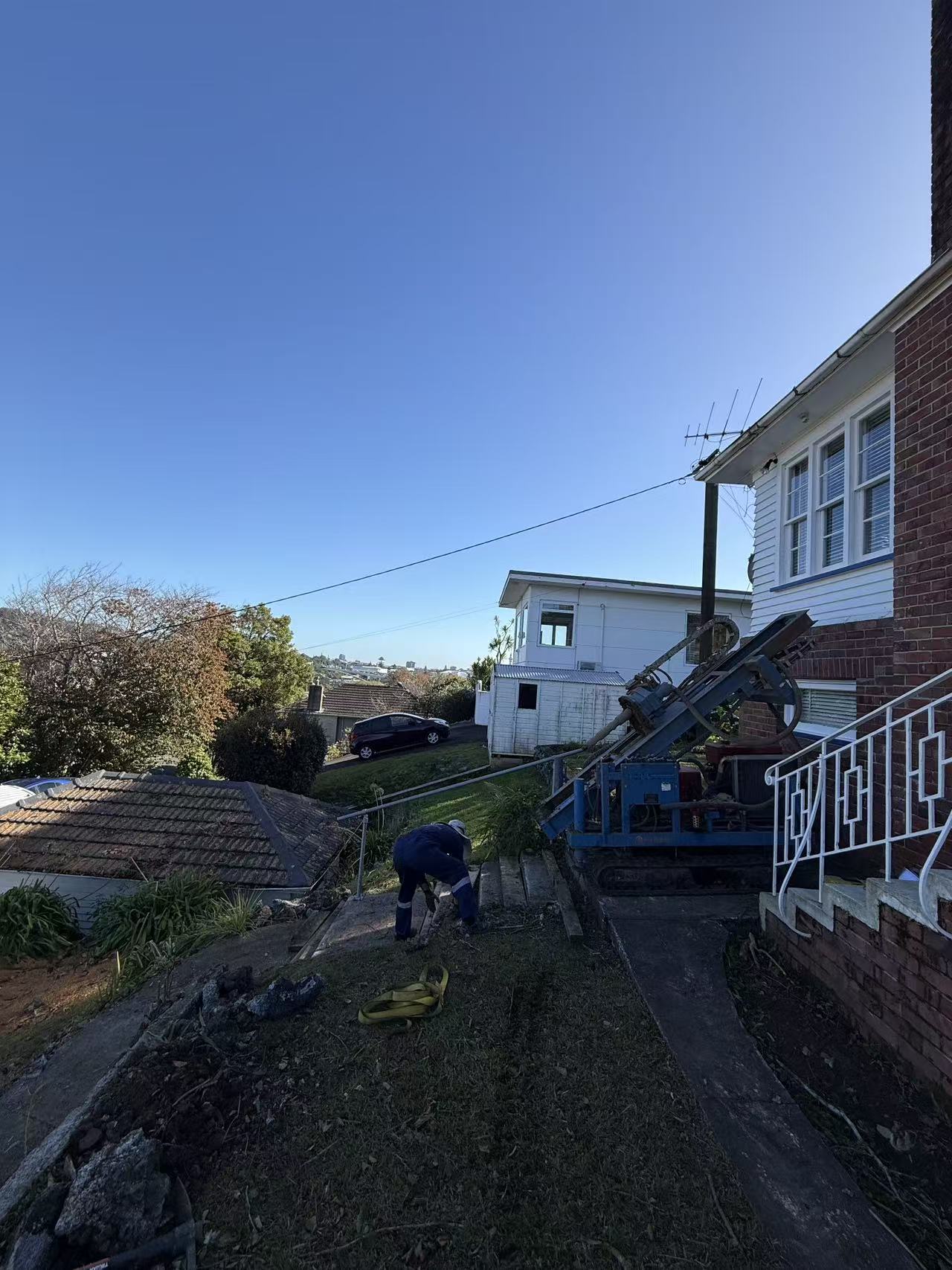
Working around the property
A view of a residential drilling site and the surrounding access area.
Locations, bore diameter, depth and testing requirements are agreed from the project brief. We discuss access and site preparation before scheduling the drilling.
Support for ground investigations.
Larger drilling setups bring together the mast, support equipment, crew and working area. These photographs show our equipment in the field.
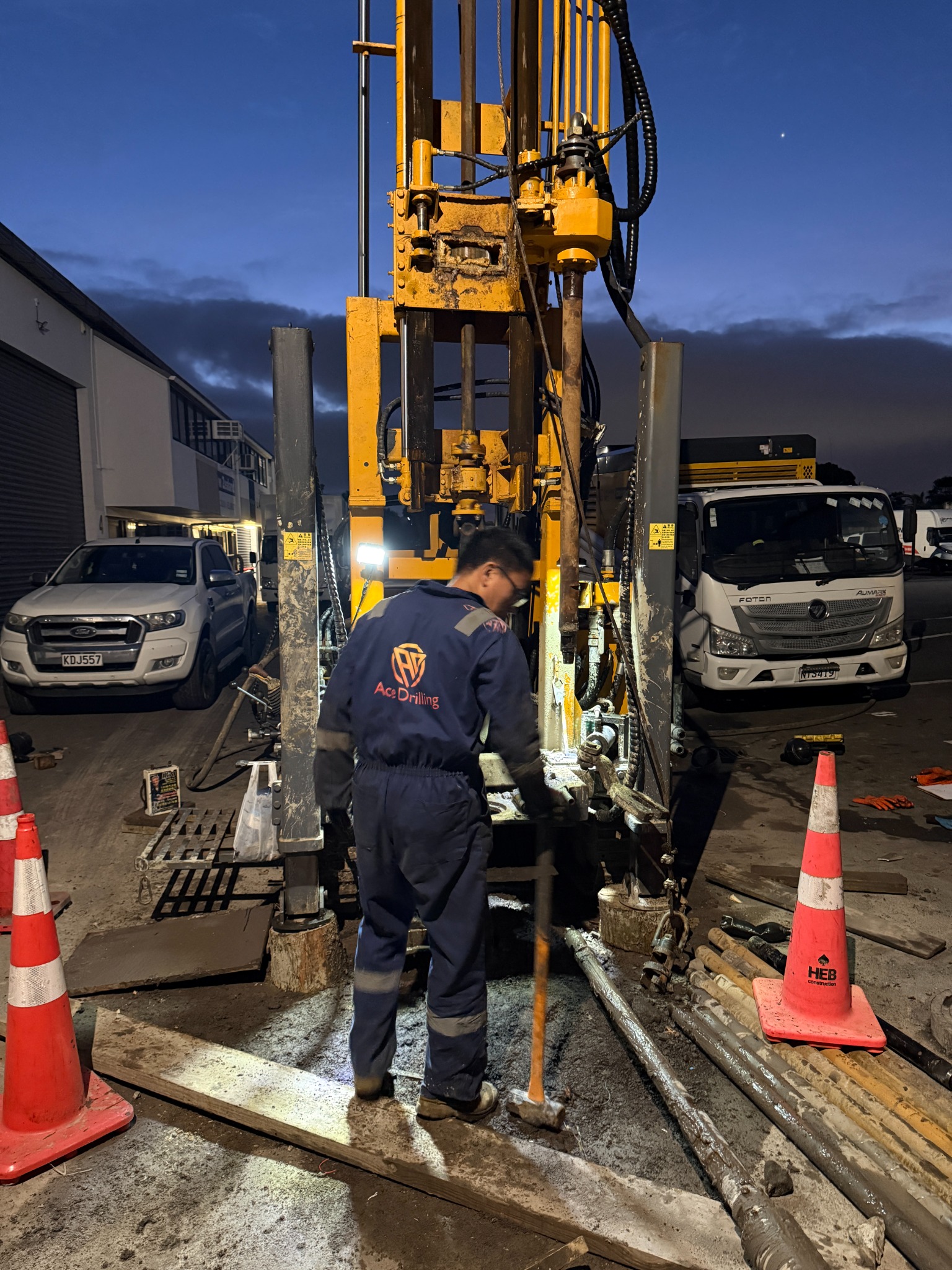
Rig and crew on location
A larger drilling setup with crew, support vehicles and marked work area.
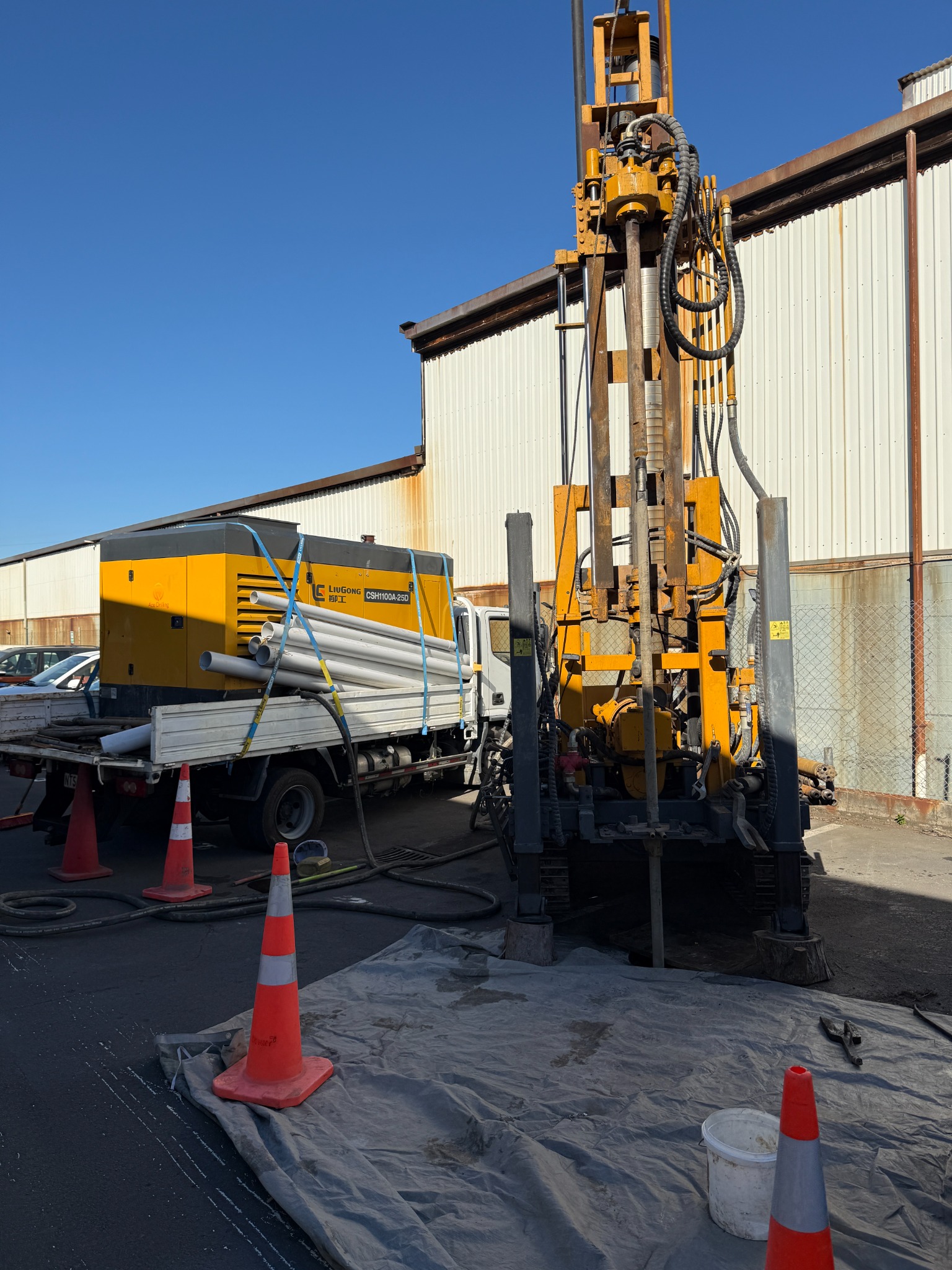
Machine drilling setup
Drilling mast and support equipment at a paved work area.
Your geotechnical engineer defines the investigation objectives. We agree the drilling, sampling and field testing scope to support that brief.
Access first. Then assess.
An existing manhole may need cleaning before its bore openings can be inspected or a useful flow test carried out. This photograph shows hydro equipment positioned at a manhole.
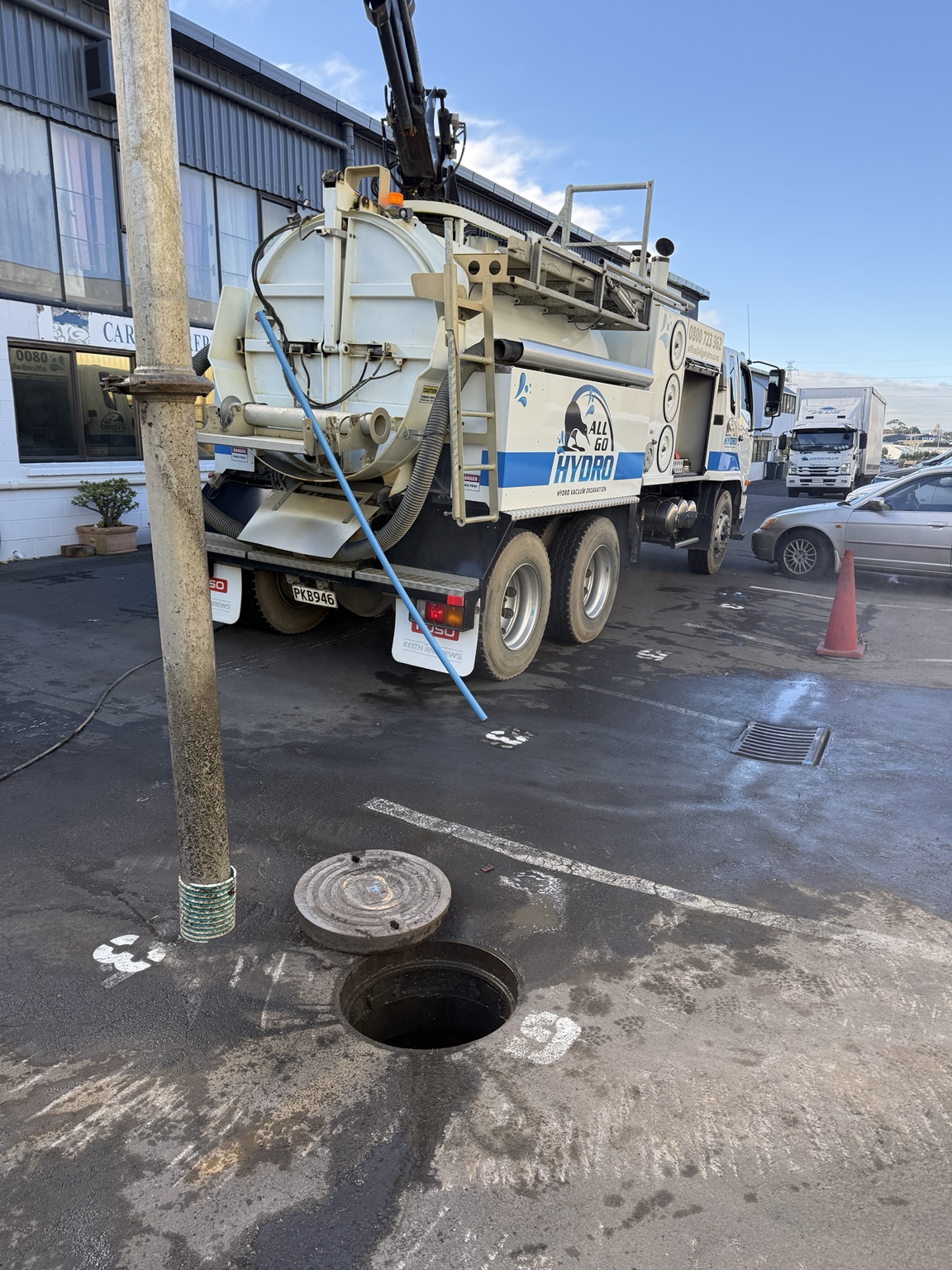
We discuss device condition, equipment access and the cleaning scope before arranging the next step. Cleaning and testing are distinct activities, each with a clear purpose.
Good projects start
with a conversation.
Send us your site address and plans. We’ll help clarify the next step.